Why Accurate CNC Machining Cost Estimation Matters
When sourcing CNC machined parts from China, the difference between a profitable project and a budget blowout often comes down to how well you estimate costs before requesting quotes. A CNC machining cost per part calculator is not just a tool—it's a strategic advantage. It helps you set realistic budgets, compare supplier quotes fairly, and avoid hidden costs that can double your final price.
In this guide, we break down the cost structure of CNC machining, provide a step-by-step estimation method, and share insider tips for negotiating with Chinese suppliers. Whether you're prototyping or scaling to full production, this guide will help you make data-informed decisions.
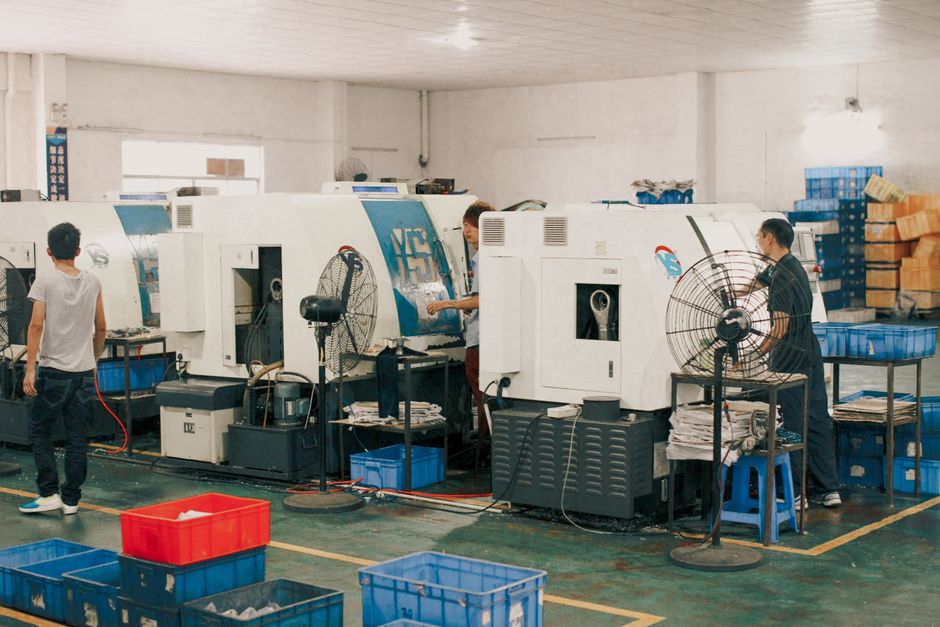
Key Cost Drivers in CNC Machining
Before you can build your own cost model, you need to understand what goes into the price of a machined part. These are the primary factors:
1. Material Cost
Material typically accounts for 20-30% of the total part cost. The price varies by metal type, grade, and market conditions. For example, aluminum 6061 is cheaper than stainless steel 316, and brass is more expensive than steel.
Use current market rates for raw material, and remember to factor in scrap rate (usually 10-15% for CNC machining).
2. Machine Hour Rate
This is the cost of running a CNC machine per hour. It includes depreciation, electricity, maintenance, and operator wages. In China, machine hour rates range from $20 to $60 depending on machine complexity (3-axis vs 5-axis) and precision requirements.
3. Setup and Tooling
Setup costs cover programming, fixturing, and test runs. For a simple part, setup can take 1-2 hours; for complex parts, it can take 8+ hours. Tooling costs include end mills, drills, inserts, and custom fixtures. These are often amortized over the order quantity.
4. Finishing and Secondary Operations
Surface treatments like anodizing, powder coating, and plating add 5-15% to the cost. Secondary operations such as tapping, threading, or assembly also increase the price per part.
5. Order Quantity
Higher quantities reduce the per-unit cost because setup and tooling costs are spread across more parts. However, you also need to consider inventory holding costs.
Step-by-Step Guide to Using a CNC Machining Cost Per Part Calculator
Here's a practical method to estimate the cost per part manually. Once you understand the math, you can build your own spreadsheet or use online calculators.
Step 1: Calculate Material Cost
Formula: Material Cost = (Part Volume × Material Density) × (1 + Scrap Rate) × Price per kg
For example, an aluminum part with volume 100 cm³ (density 2.7 g/cm³) weighs 0.27 kg. With a scrap rate of 15%, you need 0.31 kg of material. If aluminum costs $2.5/kg, material cost = 0.31 × 2.5 = $0.78.
Step 2: Estimate Machine Time
Machine time depends on part complexity, number of operations, and material hardness. A simple part might take 5 minutes, a complex one 30 minutes. Use your own experience or ask suppliers for cycle time estimates.
Machine Cost = Machine Hour Rate × (Machine Time / 60)
If the machine hour rate is $40 and the part takes 10 minutes, machine cost = $40 × (10/60) = $6.67.
Step 3: Add Setup and Tooling Amortization
Setup cost is usually a fixed amount per order. Tooling cost is also fixed. Divide both by the order quantity.
For a setup cost of $50 and tooling of $100, with an order of 100 parts, the per-part cost is ($50 + $100) / 100 = $1.50.
Step 4: Include Finishing and Secondary Operations
Finishing costs are often quoted per part. For example, anodizing might be $1 per part, powder coating $2 per part. Add these directly.
Step 5: Sum Up and Add Profit Margin
Total Cost = Material + Machine + Setup/Tooling + Finishing. Suppliers typically add a profit margin of 10-30%.
Your final estimated price per part should be the total cost plus the margin.
Real-World Example: Estimating a CNC Machined Bracket
Let's apply this to a typical product from our supplier directory: an Automotive Control Arm Bracket made from steel. Based on our directory data, the unit price range for such brackets is $2.8 to $12, depending on complexity and quantity.
| Cost Component | Assumption | Cost per Part (USD) |
|---|---|---|
| Material (steel, 0.5 kg) | Scrap 15%, price $1.2/kg | 0.69 |
| Machine time (12 min) | Hourly rate $35 | 7.00 |
| Setup/tooling amortized (100 pcs) | Setup $80, tooling $120 | 2.00 |
| Finishing (zinc plating) | $0.50 per part | 0.50 |
| Total Cost | 10.19 | |
| Supplier margin (15%) | 11.72 |
This matches the observed range for similar brackets. Use this as a benchmark when evaluating quotes.
Red Flags to Watch for When Sourcing from China
Not all suppliers are transparent. Watch out for these warning signs:
- Quotes significantly below $2.8 for steel brackets—this may indicate low-quality materials or hidden costs.
- Vague pricing breakdowns—suppliers that refuse to itemize costs may be hiding fees.
- Unusually fast turnaround promises—quality CNC machining takes time; rush jobs often lead to defects.
- No quality certifications—ISO 9001 is a minimum; ISO 13485 or AS9100 for medical/aerospace.
- Poor communication—if they don't answer technical questions clearly, expect problems later.
Questions to Ask Suppliers Before Ordering
- Can you provide a detailed breakdown of material, machine, and finishing costs?
- What is your machine hour rate and cycle time for this part?
- Do you include setup and tooling costs in the unit price, or are they separate?
- What is your standard tolerance and surface finish?
- How do you handle scrap and rework? Is there a cost?
- Can you share references from similar projects?
- What is your lead time and shipping cost?
Practical Checklists for Cost Optimization
Design for Manufacturing (DFM) Checklist
- Avoid deep cavities and tight tolerances unless necessary.
- Use standard hole sizes and thread depths.
- Minimize the number of setups by designing parts that can be machined in one or two operations.
- Choose materials that are readily available in China (e.g., 6061 aluminum, 304 stainless steel).
- Specify surface finish only where required—many parts don't need a mirror polish.
Supplier Evaluation Checklist
- Verify business license and factory photos/videos.
- Request a sample before mass production.
- Check for certifications (ISO, RoHS, etc.).
- Ask for a DFM feedback report—reputable suppliers will suggest design improvements.
- Get quotes from at least 3 suppliers to compare.
How to Use Our Supplier Directory to Your Advantage
Our directory currently lists 1 verified supplier and 4 products in the CNC machining category, including Construction Steel Hinge Bracket, Aluminum Rail Mounting Plate, and Heavy-Duty Steel Locking Bracket. The observed unit price range is $2.8 to $12, which aligns with our cost model.
Use these real-world data points to calibrate your own cost estimates. When you receive quotes, compare them against this range and the detailed breakdown from our example.
Frequently Asked Questions
1. What is the most important factor in CNC machining cost?
Machine time is often the largest cost driver, especially for complex parts. Reducing cycle time through design simplification can significantly lower costs.
2. How can I get the lowest price per part from Chinese suppliers?
Order in larger quantities, simplify your design, and be flexible with tolerances. Also, build long-term relationships with suppliers—repeat business often leads to better pricing.
3. Are there hidden costs I should watch out for?
Yes, common hidden costs include packaging, shipping, customs duties, and tooling changes for design revisions. Always ask for a total landed cost quote.
Conclusion
Mastering the CNC machining cost per part calculator is essential for successful sourcing from China. By understanding each cost component, asking the right questions, and using real market data, you can negotiate confidently and avoid overpaying. Start with our cost model, compare it with supplier quotes, and always verify with samples.
Ready to source? Explore our verified suppliers and get competitive quotes today.
Ready to source from verified suppliers? Get free quotes and compare offers within 24 hours.

