Why a Cost-Per-Part Calculator Matters When Sourcing CNC Machining from China
Chinese CNC machining suppliers can deliver excellent value—but only if you can tell a fair quote from a padded one. The difference between a $4 part and a $9 part is rarely labor alone; it is usually an unexamined assumption buried in the quote: an inflated material rate, an inflated cycle time, or a setup charge amortized over a quantity the supplier never intends to run. A cnc machining cost per part calculator turns those assumptions into numbers you can inspect, compare, and challenge.
This guide breaks down the cost model used by competent machining shops, gives you realistic China-based benchmarks for each input, and shows you how to use a cnc machining cost per part calculator to benchmark RFQs, flag outliers, and validate supplier assumptions for ISO 9001, AS9100, and IATF 16949 work in aluminum, stainless steel, and engineering plastics.
For grounding: our supplier directory currently lists 1 verified supplier and 4 products in this category, with observed unit prices ranging from $2.80 to $12.00. Example products include an automotive control arm bracket, a construction steel hinge bracket, an aluminum rail mounting plate, and a heavy-duty steel locking bracket. That $2.80–$12.00 band is a useful sanity check—if your quote lands far outside it for a comparable part, you should be able to explain exactly why.

The Cost-Per-Part Equation, Decomposed
Every credible CNC quote reduces to the same structure. Build your calculator around these five lines:
- Material cost per part = blank weight (kg) × material rate ($/kg) × (1 + scrap allowance)
- Machining cost per part = cycle time (hours) × shop rate ($/hr)
- Setup amortization per part = total setup hours × shop rate ÷ order quantity
- Finish and tolerance premiums = percentage adders on machining cost, or fixed per-part charges
- Overhead, margin, and logistics = typically 15–30% on subtotal, plus packaging and freight
If your supplier cannot or will not break a quote into these components, that itself is a data point. A shop that quotes from a real cost model can show you the breakdown; a shop that quotes from a gut feeling cannot.
Input 1: Material Cost Per Kilogram
Material is the easiest line to validate because commodity prices are public. Ask for the blank weight and the material rate separately, then compare the rate against prevailing market prices plus a reasonable sourcing margin.
| Material | Typical China rate ($/kg) | Notes |
|---|---|---|
| Aluminum 6061-T6 | 3.50–5.50 | Bar and plate; plate carries a premium |
| Aluminum 7075-T6 | 6.00–9.00 | Aerospace grades cost more and need certs |
| Stainless 304 | 4.00–6.50 | Widely stocked; competitive pricing |
| Stainless 316L | 6.00–9.00 | Marine/medical; verify mill certs |
| Steel (mild, e.g., Q235) | 0.80–1.50 | Cheapest common substrate |
| Engineering plastics (POM, PEEK, PA) | 3.00–60.00 | PEEK is an order of magnitude above POM |
Red flag: a material rate more than 30% above the ranges above without a documented reason (certified mill, small-quantity surcharge, special grade). Also check the scrap allowance—5–15% is normal for bar work; 30%+ usually means the supplier is charging you for their poor nesting or yield.
Input 2: Machining Time and Shop Rate
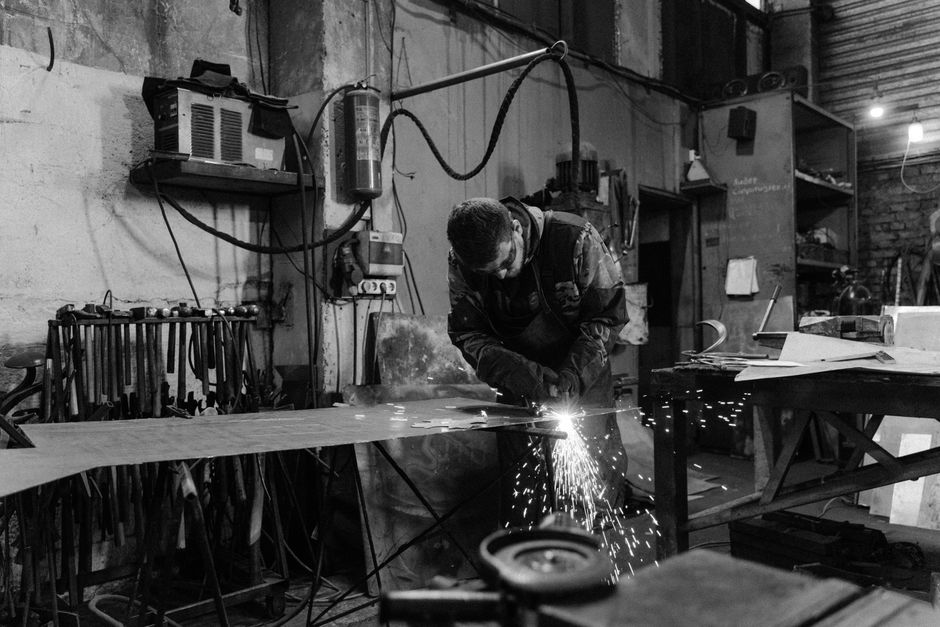
Machining cost dominates most CNC quotes. In China, effective shop rates for 3-axis CNC milling and turning typically run $15–$45 per hour, depending on machine class, region, and certification burden. Five-axis, high-precision, or AS9100-controlled work sits at the top of that band; commodity 3-axis work in Guangdong or Zhejiang sits at the bottom.
Cycle time is where quotes diverge most. A supplier quoting a 12-minute cycle for a part you know runs in 4 minutes is not necessarily dishonest—they may be running conservative feeds and speeds—but you are entitled to ask. Request the assumed cycle time per operation, the number of setups, and the machine type. Then sanity-check with a simple material removal rate estimate: cycle time ≈ volume removed ÷ (material removal rate × efficiency). For aluminum on a modern VMC, 30–80 cm³/min is realistic; for stainless, 5–15 cm³/min.
Red flag: a blended shop rate below $12/hr (unsustainable for certified work) or above $60/hr (you are paying for a brand, not a machine).
Input 3: Setup Amortization and MOQ Effects
Setup is a fixed cost, so its per-part impact collapses as quantity rises. This is the single most common source of confusion in China sourcing—and the reason MOQ conversations matter.
| Order qty | Setup cost (4 hrs × $25/hr) | Setup per part |
|---|---|---|
| 10 | $100 | $10.00 |
| 50 | $100 | $2.00 |
| 250 | $100 | $0.40 |
| 1,000 | $100 | $0.10 |
Notice that at 10 pieces, setup alone can double the part price. If a supplier quotes a low unit price at a low MOQ, either the setup is under-quoted (and will reappear as a change order) or the cycle time is optimistic. Use your cnc machining cost per part calculator to model the curve at 10, 50, 250, and 1,000 pieces—then ask the supplier to quote all four. A supplier whose price curve does not flatten is either hiding fixed costs or not being honest about their process.
Red flag: a quote that is linear in quantity (same unit price at 10 and 1,000 pieces). Real machining economics are not linear.
Input 4: Finish and Tolerance Premiums
Tolerance is the quiet cost driver. Standard machining holds ±0.1 mm cheaply. Tightening to ±0.05 mm adds inspection time and slower cutting; ±0.01 mm requires precision equipment, temperature control, and CMM verification—and can add 20–60% to the machining line.
| Tolerance band | Typical premium on machining cost | What drives it |
|---|---|---|
| ±0.1 mm (standard) | Baseline | Standard VMC, calipers |
| ±0.05 mm | +10–20% | Slower feeds, more gauging |
| ±0.02 mm | +25–40% | Precision machine, CMM sampling |
| ±0.01 mm | +40–60% | Temperature control, 100% CMM, skilled operators |
Finishes follow the same logic: as-machined is free, bead blasting and anodizing add $0.50–$3.00 per part at low volume, and hard anodizing or passivation on stainless adds more. Specify tolerances only where the drawing needs them—blanket ±0.01 mm on a bracket is a self-inflicted cost.
Red flag: a supplier who accepts ±0.01 mm everywhere without asking which features are critical. That is a sign they have not thought about inspection, and the parts will fail at receiving.
Input 5: Certification and Quality Overhead
ISO 9001 is table stakes and should not carry a meaningful premium. AS9100 (aerospace) and IATF 16949 (automotive) do carry real overhead—documentation, traceability, PPAP, first-article inspection—and a 10–25% premium on comparable work is defensible. Ask for the certificate number and verify it against the issuing body's registry; certificates are easy to display and occasionally easy to fake.
Red flag: a supplier claiming AS9100 or IATF 16949 whose quote has no line for inspection, documentation, or first-article cost. Certification without process cost is a certificate on a wall, not a quality system.
Building the Calculator: A Worked Example
Take an aluminum rail mounting plate, 0.4 kg blank, 6061-T6, ±0.05 mm on two features, bead blasted, 250-piece order, ISO 9001 supplier.
- Material: 0.4 kg × $4.50/kg × 1.10 scrap = $1.98
- Machining: 0.15 hr × $22/hr = $3.30
- Setup: 4 hr × $22/hr ÷ 250 = $0.35
- Tolerance premium: 15% of machining = $0.50
- Finish: bead blast = $0.80
- Subtotal: $6.93
- Overhead + margin (20%): $1.39
- Calculated cost per part: ~$8.32
Now compare against the observed $2.80–$12.00 range for bracket-type parts in our directory. A quote of $7.50–$9.50 is credible. A quote of $4.00 means the supplier is assuming a faster cycle or cheaper material—ask which. A quote of $13.00 means something is inflated—ask for the breakdown. That is the entire purpose of the calculator: it gives you a defensible number to negotiate against.
Flagging 30%+ Outliers
Set a rule: any quote more than 30% away from your calculated cost triggers a structured challenge. Do not simply reject it—ask the supplier to justify the specific line that differs. Common legitimate explanations include small-quantity material surcharges, unusually complex fixturing, or a premium machine class. Common illegitimate ones include inflated cycle time, padded material rates, and setup charges that never amortize.
Questions to Ask Every Supplier
- Can you provide a line-item cost breakdown (material, machining, setup, finish, inspection)?
- What cycle time and machine type did you assume, and how many setups?
- What is the blank weight and material rate, and what scrap allowance did you apply?
- How does your unit price change at 10, 50, 250, and 1,000 pieces?
- Which certificate number covers this work, and can you share the registry listing?
- What inspection method and sampling rate will you use for the tightest tolerance?
- What is your first-article and PPAP capability, and what does it cost?
- What are your standard lead times, and what triggers a change order?
Practical Pre-Order Checklist
- ☐ Drawing specifies tolerances only where functionally required
- ☐ Material grade and mill-cert requirement stated explicitly
- ☐ Calculator run at three quantity tiers; supplier quoted all three
- ☐ Quote broken into material, machining, setup, finish, inspection
- ☐ Material rate and blank weight cross-checked against market
- ☐ Cycle time and setup count stated and plausible
- ☐ Certification number verified against issuing body registry
- ☐ Outliers beyond 30% of calculated cost formally challenged
- ☐ First-article inspection and sampling plan agreed in writing
- ☐ Payment terms, change-order triggers, and lead time documented
Frequently Asked Questions
What is a realistic CNC machining shop rate in China?
For 3-axis milling and turning, $15–$45 per hour is the realistic band. Commodity work sits near the bottom; five-axis, high-precision, or AS9100/IATF 16949-controlled work sits near the top. A rate below $12/hr is hard to sustain for certified work, and above $60/hr you are paying for brand rather than capability.
Why does my unit price barely drop when I increase the order quantity?
It should drop—setup is a fixed cost that amortizes across the order. If the price is nearly flat from 10 to 1,000 pieces, the supplier is either not quoting from a real cost model or is folding fixed costs into the unit rate to protect margin. Ask for the setup line separately and re-run your cnc machining cost per part calculator at each tier.
How much should tightening tolerance from ±0.05 mm to ±0.01 mm add?
Expect roughly 40–60% on the machining line when moving from ±0.05 mm to ±0.01 mm, driven by slower cutting, temperature control, and CMM verification. If a supplier quotes no premium at all for that jump, question whether they can actually inspect to it.
Bottom Line
A cnc machining cost per part calculator is not a negotiating trick—it is a due-diligence instrument. It forces every quote into five inspectable lines, gives you a defensible benchmark against observed market ranges, and turns "this feels expensive" into "your cycle time assumption is 40% above our estimate; please justify it." Build the model once, run it on every RFQ, and challenge every 30%+ outlier. That discipline is what separates buyers who get fair pricing from buyers who get quoted.
Ready to source from verified suppliers? Get free quotes and compare offers within 24 hours.

